


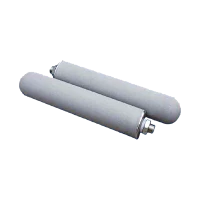
As a supplier of Click here for Coal Dirt Filter Bags, one of the most frequently asked questions from our customers is about the wind - resistance coefficient of coal dirt filter bags. This parameter is crucial as it directly impacts the efficiency and performance of the filtration process in coal - related industries. In this blog post, I will delve deep into the concept of the wind - resistance coefficient, why it matters for coal dirt filter bags, and how it is measured and optimized.


Understanding the Wind - Resistance Coefficient
The wind - resistance coefficient, also known as the drag coefficient, is a dimensionless quantity that is used to quantify the resistance of an object to the flow of a fluid (in this case, air). In the context of coal dirt filter bags, it represents the amount of air resistance that the filter bag experiences when air passes through it. A lower wind - resistance coefficient means that the air can flow through the filter bag more easily, which in turn reduces the energy consumption of the ventilation system and improves the overall filtration efficiency.
Significance for Coal Dirt Filter Bags
-
Energy Efficiency: In coal processing plants, large - scale ventilation systems are used to remove coal dust and maintain a safe working environment. These systems consume a significant amount of energy to push air through the filter bags. A filter bag with a high wind - resistance coefficient requires more energy to operate the ventilation fans. By using filter bags with a lower wind - resistance coefficient, companies can significantly reduce their energy costs while still maintaining effective filtration.
-
Filtration Performance: The wind - resistance coefficient also impacts the filtration performance of the bags. If the resistance is too high, the airflow through the bag may be restricted, leading to uneven filtration and potentially reduced dust removal efficiency. On the other hand, an optimal wind - resistance coefficient ensures a consistent and proper airflow, which helps in capturing coal dust particles more effectively.
-
Service Life: Excessive wind resistance can put additional stress on the filter bags. Over time, this can lead to increased wear and tear, causing the bags to fail prematurely. A well - designed filter bag with an appropriate wind - resistance coefficient is less likely to experience such problems, thus extending its service life and reducing the frequency of bag replacements.
Factors Affecting the Wind - Resistance Coefficient of Coal Dirt Filter Bags
-
Fabric Structure: The type of fabric used in the filter bag greatly influences its wind - resistance coefficient. For instance, a tightly woven fabric will generally have a higher resistance compared to a more loosely constructed one. However, a looser fabric may not provide as high a level of dust filtration. Therefore, a balance needs to be struck between fabric density and wind resistance.
-
Pore Size: The size of the pores in the filter bag fabric is another critical factor. Smaller pore sizes are more effective at capturing fine coal dust particles but can also increase the wind resistance. Larger pore sizes allow for easier airflow but may not filter out all the dust. Our Coal Dirt Filter Bags are engineered to have an optimal pore size that balances filtration efficiency and wind resistance.
-
Dust Accumulation: As coal dust accumulates on the surface of the filter bag during the filtration process, it can increase the wind resistance. Regular cleaning of the filter bags is essential to maintain a low wind - resistance coefficient. There are various cleaning methods available, such as pulse - jet cleaning, which helps to dislodge the accumulated dust and restore the airflow through the bag.
Measuring the Wind - Resistance Coefficient
The wind - resistance coefficient of a coal dirt filter bag can be determined through both theoretical calculations and experimental testing.
-
Theoretical Calculations: These are based on the fluid dynamics equations such as the Bernoulli's principle and the Navier - Stokes equations. However, these calculations often require a detailed understanding of the bag's geometry, fabric properties, and the airflow conditions, which can be complex and may require advanced computational tools.
-
Experimental Testing: This is a more practical approach. In a laboratory setting, the filter bag is placed in a wind tunnel, and the airflow through the bag is measured under controlled conditions. By varying the air velocity and measuring the corresponding pressure drop across the bag, the wind - resistance coefficient can be calculated. At our company, we conduct rigorous experimental tests on all our filter bags to ensure that they meet the required standards for wind resistance.
Optimizing the Wind - Resistance Coefficient
To optimize the wind - resistance coefficient of our coal dirt filter bags, we use advanced fabric manufacturing techniques and innovative design concepts.
-
Fabric Selection and Design: We carefully select high - quality fabrics that offer a good balance between strength, filtration efficiency, and wind resistance. Our engineers also use computer - aided design (CAD) to optimize the fabric structure and pore size distribution.
-
Surface Treatments: Appropriate surface treatments can be applied to the filter bags to reduce the wind resistance. For example, a special coating can be used to make the surface of the bag smoother, which allows the air to flow more easily.
-
System Integration: We work closely with our customers to ensure that the filter bags are properly integrated into their ventilation systems. This includes considering factors such as the layout of the ducts, the location of the fans, and the overall system design to minimize the wind resistance.
Comparison with Other Types of Filter Bags
While we focus on coal dirt filter bags, it is interesting to compare their wind - resistance coefficients with those of other specialty filter bags. For example, Cleaning Aquarium Filter Socks are designed for a different application where the airflow requirements and the nature of the particles being filtered are quite different. These filter socks usually have a relatively low wind - resistance coefficient as they are designed to allow for easy water flow (in the case of aquarium applications), and the particles being filtered are much smaller and less dense than coal dust.
Milk Tea Filter Bags are used in the food and beverage industry. They need to have a balance between filtering out tea leaves and other debris while still allowing the liquid to pass through smoothly. Compared to coal dirt filter bags, they typically have a lower wind - resistance coefficient as the filtration process is mainly for liquid rather than air.
Conclusion
The wind - resistance coefficient of coal dirt filter bags is a vital parameter that affects the energy efficiency, filtration performance, and service life of the bags. As a leading supplier of coal dirt filter bags, we are committed to providing our customers with high - quality products that have optimized wind - resistance coefficients. Our team of experts continuously conducts research and development to improve the design and manufacturing processes of our filter bags.
If you are in the market for reliable Coal Dirt Filter Bags and want to discuss your specific requirements, we invite you to contact us. We are ready to work with you to find the best filtration solutions for your coal - related operations.
References
- "Fluid Mechanics" by Frank M. White
- "Filtration Principles and Practices" by Terry A. Reed and Norman I. Wilhelm
- Industry reports on ventilation and filtration systems in coal processing plants