


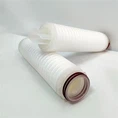
Alright, folks! As a supplier of Primary Plate Air Filters, I often get asked about the airflow capacity of these filters. So, I thought I'd take a moment to break it down for you in this blog post.
First off, let's talk about what airflow capacity actually means. In simple terms, it's the amount of air that can pass through the filter in a given amount of time. This is a crucial factor because it determines how well the filter can do its job of cleaning the air. If the airflow capacity is too low, the filter might get clogged quickly, and the air won't be able to flow through efficiently. On the other hand, if the airflow capacity is too high, the filter might not be able to trap enough contaminants.
So, what affects the airflow capacity of a primary plate air filter? Well, there are several factors. One of the main ones is the material the filter is made of. Different materials have different levels of porosity, which is basically how many tiny holes or spaces there are in the material. The more porous the material, the more air can pass through it.
For example, our Primary Metal Air Filter is made of metal mesh, which has relatively large pores. This allows a high volume of air to flow through the filter quickly. It's great for applications where you need a high airflow rate, like in large industrial settings.
Another factor is the design of the filter. Some filters are designed with a pleated or folded structure, which increases the surface area of the filter. This means there's more area for the air to pass through, which can improve the airflow capacity. Our Folding Primary Air Filter is a great example of this. The folds create more surface area, allowing the filter to capture more contaminants without sacrificing airflow.
The thickness of the filter also plays a role. A thicker filter might be more effective at trapping small particles, but it can also restrict the airflow. That's why it's important to find the right balance. Our Primary Effect Nylon Air Filter is made of a nylon material that's thick enough to capture a good amount of contaminants, but still allows for a decent airflow rate.
Now, let's talk about how you can measure the airflow capacity of a primary plate air filter. One common way is to use a device called an anemometer. This measures the speed of the air as it passes through the filter. You can also measure the pressure drop across the filter. A higher pressure drop usually indicates a lower airflow capacity, because the air has to work harder to get through the filter.
It's important to note that the airflow capacity of a filter can change over time. As the filter captures more contaminants, it can become clogged, which reduces the airflow. That's why it's important to regularly clean or replace your filters.
So, why is all of this important? Well, if you're using a primary plate air filter in your HVAC system, for example, a low airflow capacity can lead to a number of problems. It can make your system work harder, which can increase your energy bills. It can also lead to poor air quality, because the filter won't be able to trap as many contaminants.
On the other hand, if you choose a filter with the right airflow capacity for your needs, you can ensure that your system runs efficiently and that you're getting clean, fresh air.
As a supplier, we're always happy to help you choose the right primary plate air filter for your specific application. Whether you need a high airflow rate for an industrial setting or a more balanced filter for a residential HVAC system, we've got you covered.
If you're interested in learning more about our products or have any questions about airflow capacity or any other aspect of our primary plate air filters, don't hesitate to reach out. We're here to help you make the best choice for your air filtration needs. Contact us today to start the conversation and let's find the perfect filter for you!


References
- HVAC Systems 101: Understanding Airflow and Filtration
- Air Filter Basics: What You Need to Know