


Can a string wound depth filter cartridge remove bacteria?
As a supplier of depth filter cartridges, I'm frequently asked about the capabilities of our products, especially regarding their effectiveness in removing bacteria. String wound depth filter cartridges are a popular choice in many industries due to their unique structure and filtration mechanism. In this blog, I'll delve into the science behind these cartridges and address the critical question: Can a string wound depth filter cartridge remove bacteria?
Understanding String Wound Depth Filter Cartridges
Before we discuss bacteria removal, let's first understand what a string wound depth filter cartridge is. A String Wound Filter is constructed by winding a continuous strand of yarn around a central core. This winding process creates a dense, multi-layered filtration medium with a progressive pore size gradient. The outer layers have larger pores, which capture larger particles, while the inner layers have smaller pores, providing a finer filtration.
This depth filtration design allows the cartridge to trap particles throughout its entire thickness, rather than just on the surface. As a result, string wound depth filter cartridges have a higher dirt-holding capacity compared to surface filters, which means they can operate for longer periods before needing replacement.
The Mechanism of Bacteria Removal
Bacteria are microscopic organisms, typically ranging in size from 0.2 to 10 micrometers. The ability of a string wound depth filter cartridge to remove bacteria depends on several factors, including the pore size of the cartridge, the type of bacteria, and the operating conditions.
Pore Size: The pore size of a string wound depth filter cartridge is a crucial factor in determining its effectiveness in removing bacteria. Cartridges with smaller pore sizes are more likely to trap bacteria. However, it's important to note that pore size is not the only determinant. The structure of the filter media and the way bacteria interact with it also play a role.
Type of Bacteria: Different types of bacteria have different shapes, sizes, and surface properties. Some bacteria are more easily trapped by the filter media, while others may be more likely to pass through. For example, rod-shaped bacteria may have a higher chance of being trapped compared to spherical bacteria, as they can become entangled in the fibers of the filter media.
Operating Conditions: The flow rate, pressure, and temperature of the fluid being filtered can also affect the bacteria removal efficiency of a string wound depth filter cartridge. Higher flow rates may reduce the contact time between the bacteria and the filter media, allowing some bacteria to pass through. Similarly, high pressures may cause the bacteria to be forced through the pores of the filter.
Scientific Evidence and Testing
Numerous studies have been conducted to evaluate the effectiveness of string wound depth filter cartridges in removing bacteria. These studies typically involve challenging the filter cartridges with a known concentration of bacteria and measuring the reduction in bacteria concentration after filtration.
In general, string wound depth filter cartridges with a pore size of 1 micrometer or less have been shown to be effective in removing a significant portion of bacteria. However, it's important to note that the removal efficiency may vary depending on the specific type of bacteria and the operating conditions.
For example, a study published in the Journal of Environmental Science and Health found that a string wound depth filter cartridge with a pore size of 0.5 micrometers was able to remove over 99% of Escherichia coli (E. coli) bacteria from water. Another study conducted by a independent testing laboratory showed that a Industrial Depth Filter Cartridge with a 1 micrometer pore size was effective in reducing the concentration of Pseudomonas aeruginosa bacteria in a industrial wastewater stream.
Limitations and Considerations
While string wound depth filter cartridges can be effective in removing bacteria, it's important to recognize their limitations. These cartridges are not a substitute for disinfection processes, such as chlorination or ultraviolet (UV) treatment. Bacteria can still survive on the surface of the filter media or in the pores, and there is a risk of bacteria regrowth over time.
In addition, string wound depth filter cartridges may not be suitable for all applications. For example, in high-purity applications, such as pharmaceutical manufacturing or food and beverage production, additional filtration steps or more advanced filtration technologies may be required to ensure the complete removal of bacteria.
Applications in Different Industries
String wound depth filter cartridges are used in a wide range of industries for bacteria removal and other filtration purposes. Here are some examples:
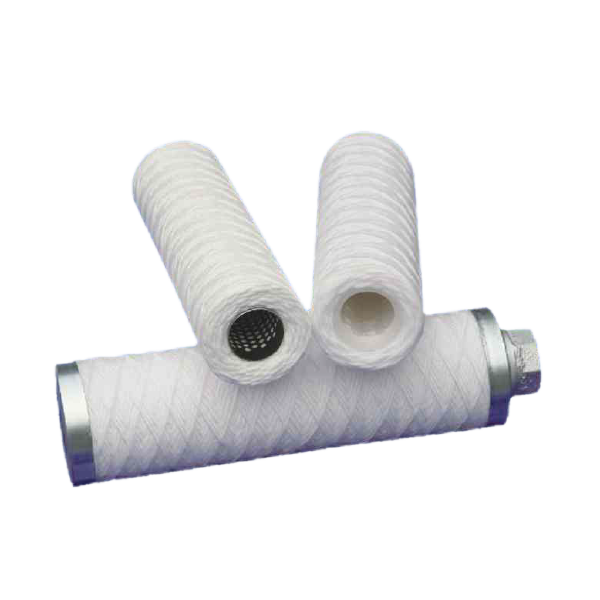

Water Treatment: In municipal water treatment plants, string wound depth filter cartridges are often used as a pre-filter to remove larger particles and sediment before the water undergoes disinfection. This helps to protect the disinfection equipment and improve the overall efficiency of the treatment process.
Food and Beverage Industry: String wound depth filter cartridges are used in the food and beverage industry to remove bacteria, yeast, and mold from liquids such as beer, wine, and fruit juices. This helps to extend the shelf life of the products and improve their quality.
Pharmaceutical Industry: In the pharmaceutical industry, string wound depth filter cartridges are used in the production of drugs and biologics to remove bacteria and other contaminants from the manufacturing process. This is critical to ensure the safety and efficacy of the final products.
Industrial Processes: String wound depth filter cartridges are also used in various industrial processes, such as oil and gas refining, chemical manufacturing, and electronics manufacturing, to remove bacteria and other impurities from process fluids. For example, a Depth Filter Cartridge For Oil can help to remove bacteria and other contaminants from lubricating oil, improving the performance and longevity of the equipment.
Conclusion
In conclusion, a string wound depth filter cartridge can be effective in removing bacteria, especially when the pore size is small enough and the operating conditions are optimized. However, it's important to recognize the limitations of these cartridges and to use them in conjunction with other disinfection and filtration processes when necessary.
As a supplier of depth filter cartridges, we offer a wide range of string wound depth filter cartridges with different pore sizes and specifications to meet the diverse needs of our customers. Our cartridges are manufactured using high-quality materials and advanced manufacturing processes to ensure their performance and reliability.
If you're interested in learning more about our string wound depth filter cartridges or have any questions about bacteria removal in your specific application, please don't hesitate to contact us. Our team of experts is ready to provide you with the information and support you need to make the right filtration decisions for your business.
References
- Journal of Environmental Science and Health, “Effectiveness of String Wound Depth Filter Cartridges in Removing Escherichia coli from Water”
- Independent testing laboratory report on the performance of Industrial Depth Filter Cartridges in removing Pseudomonas aeruginosa from industrial wastewater.