


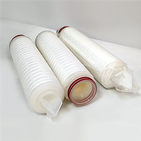


In modern industrial production, the importance of high-efficiency filtration systems has become increasingly prominent, and bag filter bags, as core filtration components, have become an indispensable solution for many industries with their excellent performance and wide application scenarios. Whether in the fields of chemical industry, metallurgy, cement or food processing, bag filter bags provide strong guarantees for the production process with their reliable filtration effect and stable operation performance.
The core function of bag filter bags is to separate particulate matter in gas or liquid through the physical interception and adsorption of fiber materials, thereby achieving the purpose of purification. Its filtration accuracy can be adjusted according to demand, covering from micron to nanometer level, meeting the refined filtration requirements of different industries. In addition, bag filter bags are usually made of high temperature and corrosion resistant materials, such as polyester, polypropylene, PTFE, etc., which can adapt to harsh working conditions such as high temperature, high humidity, and strong corrosion, and greatly extend their service life.
In industrial applications, the advantages of bag filter bags are not only reflected in filtration efficiency, but also in their economy and maintainability. Compared with traditional filtering equipment, bag filter bags are easier to replace and clean, which can significantly reduce downtime and improve production efficiency. At the same time, the modular design makes the installation and replacement of filter bags easier, reducing labor costs and equipment maintenance difficulties.
In recent years, with the increasingly stringent environmental protection regulations, the application of bag filter bags in the field of waste gas treatment has also shown a rapid growth trend. Especially in the flue gas dust removal systems of coal-fired power plants, steel plants and cement plants, bag filter bags have become key equipment for achieving ultra-low emissions with their efficient dust capture capacity and stable operating performance. In addition, in the food and pharmaceutical industries, the aseptic filtration characteristics of bag filter bags also make them an important tool for ensuring product quality.
In the future, with the continuous advancement of material science and manufacturing processes, the performance of bag filter bags will be further improved and the application scenarios will be more extensive. Whether it is the upgrading and transformation of traditional industries or the rapid development of emerging industries, bag filter bags will continue to play their irreplaceable role and provide strong support for the sustainable development of global industries.